Product geometry
Translate use, handling, nesting and presentation requirements into manufacturable geometry.
Tooling engineering
Smartfib engineers the product and its tooling as one manufacturing system—so geometry, quality, cycle time and repeatability are resolved before production scales.
Why tooling matters
A production tool controls fibre distribution, water removal, transfer, surface finish, dimensional stability, release and stackability. Weak tooling decisions reappear later as quality loss, longer cycles and unstable production.
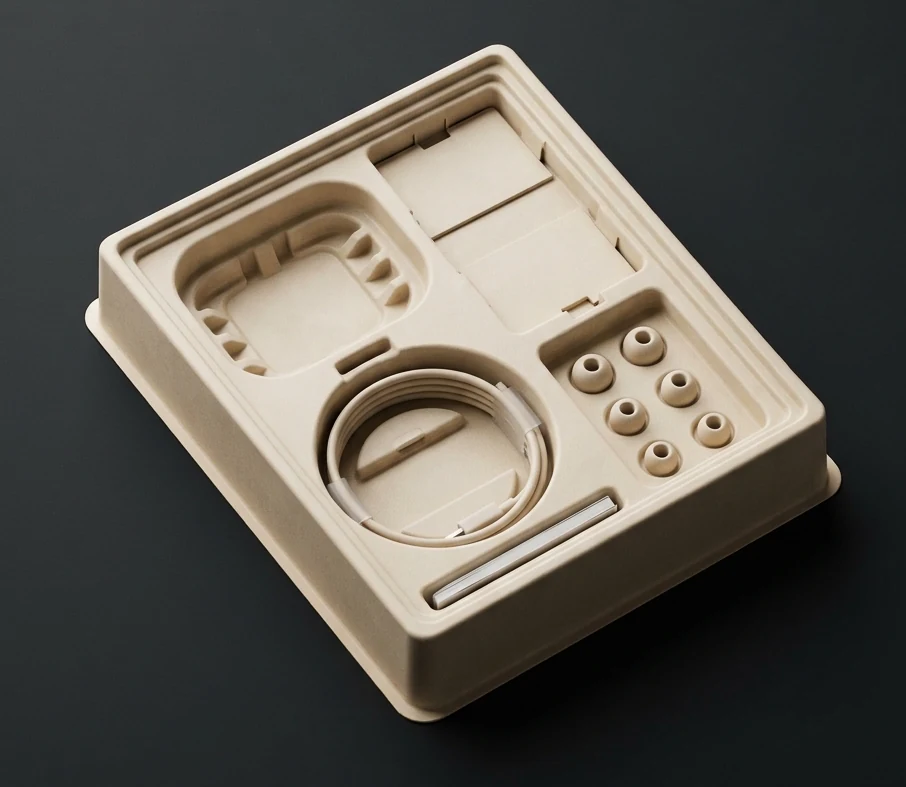
Engineering scope
Each decision is evaluated against product performance, manufacturing stability and the expected production volume.
Translate use, handling, nesting and presentation requirements into manufacturable geometry.
Control water removal, fibre distribution, release and local surface quality.
Anticipate dimensional change through forming, hot pressing, drying and conditioning.
Balance release, texture, finish, cleaning and long-term tool performance.
Engineer stable nesting without locking, abrasion or excessive stack height.
Design for predictable cycles, maintenance access and consistent part quality.
Application, dimensions, use conditions, annual volume and target production process.
Geometry, drainage, venting, shrinkage, transfer, release and surface requirements.
Trials, process setting, quality stabilisation, maintenance and improvement.
Start the conversation
Share the application, expected annual volume and current development stage. CAD review can be added in the next release; the initial engineering discussion starts now.